A doctoral research project about how young Syrians living in Jordan think and make decisions about whether to stay, return, or move to another country, and how these decisions influence and are influenced by future life plans.
ABOUT THIS RESEARCH PROJECT
Although there is growing academic and policy literature on how and why people aspire to migrate, the specific migration and stay aspirations and capabilities of refugee youth, and the influence of life aspirations, have received limited attention. This research project seeks to understand how the aspirations and capabilities of Syrian youth (18–35 years) living in Jordan form and evolve over time, how they intersect with life aspirations, and how protracted displacement and contexts in countries of origin and envisioned destination(s) influence them.

RESEARCH QUESTIONS
The main research question guiding this project is: how and under what circumstances do refugee youth's aspirations and capabilities to (onward) migrate, stay, or return form and evolve in protracted displacement?
- How do life aspirations intersect with (im)mobility aspirations and capabilities in protracted displacement?
- What influence do protracted displacement and contexts in countries of origin and destination(s) have on (im)mobility aspirations and capabilities?
- How do unfulfilled (im)mobility aspirations impact life aspirations and well-being?
METHODS
This project combines secondary data, life histories, and in-depth interviews. My aim is to follow the same group of participants between September 2026 and June 2027 to allow for multiple exchanges over time.
WHERE THE RESEARCH TAKES PLACE
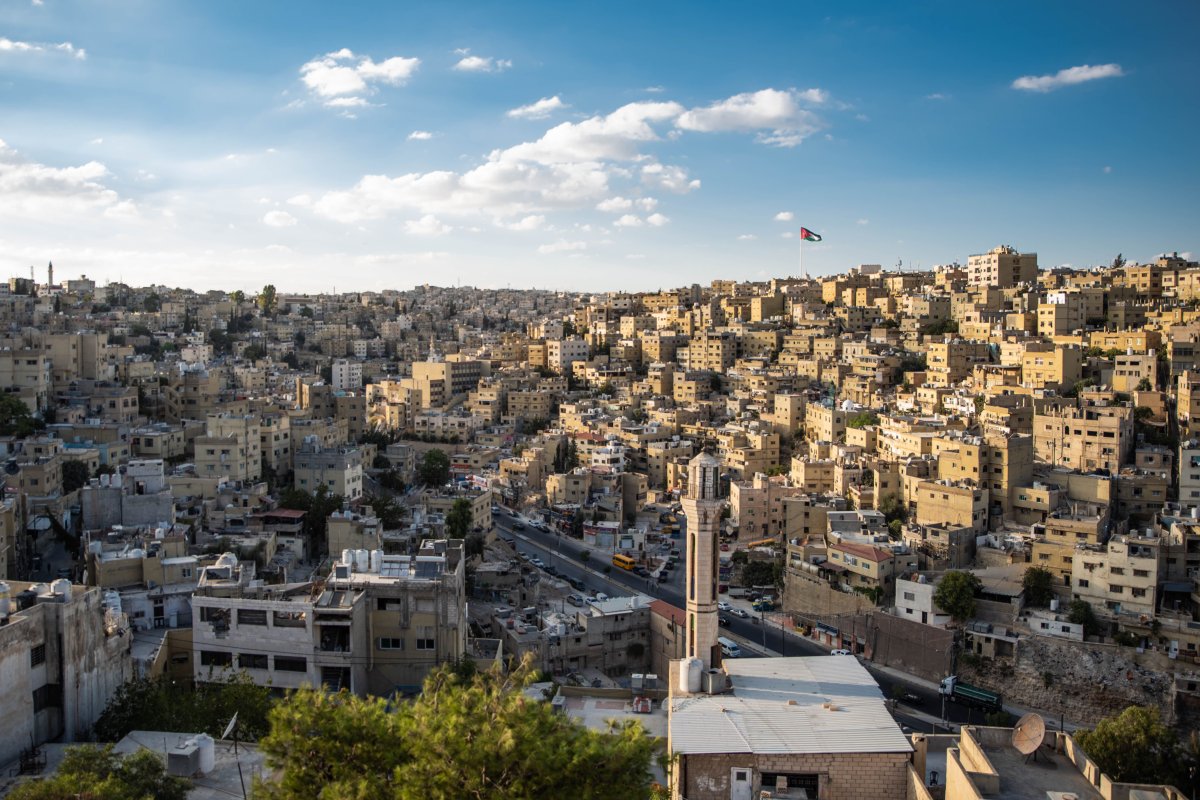
I conduct field research with Syrian youth aged 18–35 living in Jordan, primarily in Amman, Mafraq, and Irbid, where over three-quarters of Syrian refugees live.
HOW TO PARTICIPATE
Curious about what it means to be a participant? Find information below, or click here to download all the details.
Who can take part?
I am inviting you to participate in this study if you are Syrian, between the ages of 18 and 35 years, and arrived in Jordan after 2011.
What will happen if I take part?
If you agree to participate, you will be invited to participate in up to three rounds of interviews over the next nine months, from September 2026 to June 2027.
- Round 1: up to 2 hours, in person
- Round 2: up to 1 hour, remote
- Round 3: up to 2 hours, in person
The interviews will take place at a location of your preference that is safe, private, and comfortable for you. The interviews will be open-ended, which means that I will ask some opening questions and let you tell me about:
- Your story and everyday life in Jordan
- Your thoughts and aspirations about moving to another country, staying in Jordan, or returning to Syria
- Your aspirations about work, education, family, and other issues that are important to you
How will the information be documented?
With your permission, I would like to audio-record our conversations. The recordings will help me capture everything more accurately. The recordings will not mention your name and will be transcribed using secure software (Goodtape.io) and with the help of a research assistant. The audio recordings will be permanently deleted after being transcribed. If you prefer not to be recorded, you can still participate, and I will take notes by hand instead.
Do I have to take part?
Your participation is completely voluntary. You can take as much time as you need and ask any questions to help you decide whether you want to participate. After you decide to participate, you can take a break or stop participating at any time you want—before, during, or after any interview—without giving any reason.
What are the possible disadvantages of taking part?
During our conversations, some topics may feel personal or emotionally difficult. You can skip any question you do not want to answer, ask for a break, or stop the interview at any point.
What are the possible benefits of taking part?
Your participation can contribute to understanding how researchers, policymakers, and organisations understand migration and stay aspirations, and the life plans of young people living in displacement.
Will I receive compensation for participating?
As a researcher, I cannot provide any direct benefit, services, or assistance. However, I will reimburse your travel expenses for meeting with me for the interviews. A meal will also be provided.
Who will know I participated?
Your participation will be kept confidential. To protect your identity, I will use a pseudonym and remove your name and other identifiable information from the audio recordings and transcripts.
What will happen to the information?
The information that you share with me will be used to write my PhD thesis and other related academic publications. At the end of the study, you will receive a copy of the summary of the results.
How will the information be stored?
The information that you share with me will be stored on a secure server called SURFdrive that only my supervisors and I will have access to. Your name and other personally identifiable information will be separated from the information you share with me to protect your identity. At the end of my PhD, pseudonymised data will be deposited in a data archive for scientific data (Dataverse NL), but access will remain restricted and subject to ethical approval and data protection requirements. Data will be handled in line with applicable data protection requirements, including GDPR and relevant Maastricht University research and ethics requirements.
Can I access my personal study data?
Yes, you can access the transcripts of the interviews I will be doing with you throughout the study.
Who has reviewed this study?
This study has been reviewed and approved by the Ethics Review Committee Inner City faculties (ERCIC) at Maastricht University.
I am currently looking for an Arabic-speaking field research assistant based in Jordan. Download the terms of reference here. If you are interested, or know someone who would be, contact me!
SUPERVISORY TEAM
This research project is being supervised by:
- Prof. Dr. Melissa Siegel, Maastricht University, UNU-MERIT
- Dr. Michaella Vanore, Maastricht University
- Dr. Sonja Fransen, Humanitarian Studies Centre, Erasmus University Rotterdam